HUASHA OUTDOOR
info@huashaoutdoor.com
 Nantong Huasha Movable House Co., Ltd info@huashaoutdoor.com
Nantong Huasha Movable House Co., Ltd info@huashaoutdoor.com
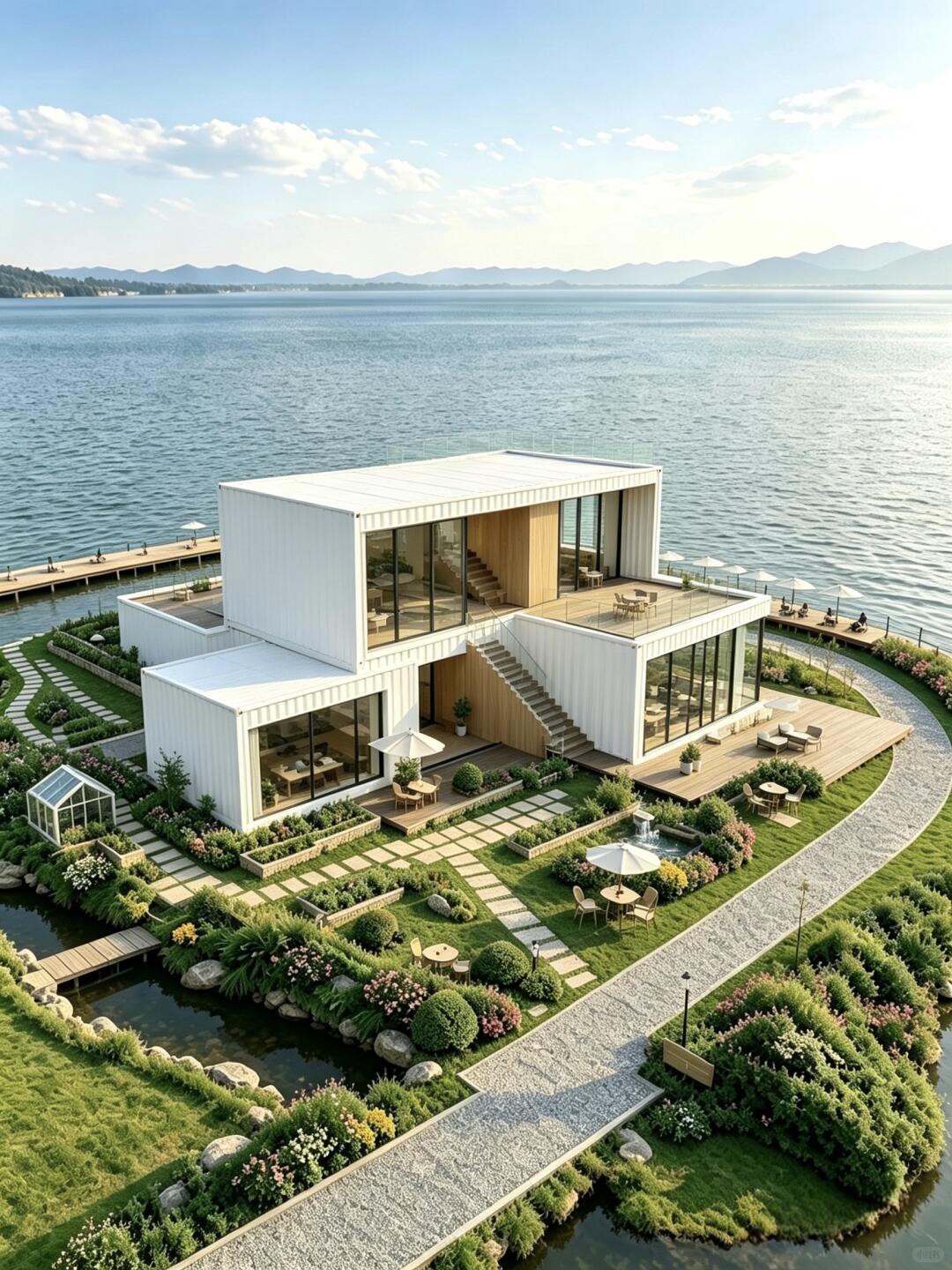
For international resort developers, the unit mix used to be a logistical decision. Today, it is a psychological one. As luxury travelers increasingly seek “experiential stays,” the physical structure of a glamping unit becomes the primary tool for shaping guest emotion, behavior, and ultimately, online reputation. The question is no longer “How many tents do we need?” but “What journey do we want each guest to feel?”
Drawing on HUASHA Outdoor’s 20+ years of steel-structure engineering and 100+ completed projects across 50+ countries, this article breaks down how safari tents, stretch tents, and modular POD cabins can be orchestrated into a cohesive, five-star guest journey — and why the right spatial psychology directly drives ADR, occupancy, and review scores.
Every memorable stay follows a three-act structure: Arrival (anticipation and first impression), Immersion (rest, discovery, and comfort), and Memory (the moment guests photograph, share, and review). Different unit typologies excel at different acts.
A stretch tent, with its wide-open membrane and dramatic sightlines, is the ultimate arrival statement — it frames the landscape like a living canvas. A safari tent, with its classic canvas walls and private deck, excels at immersion, offering the tactile warmth of a permanent boutique suite. A modular POD cabin, with its precision-engineered envelope and floor-to-ceiling glazing, creates the memory moment — a sculptural object in nature that guests cannot stop photographing. Resorts that mix all three effectively design a complete emotional arc.
Data from recent hospitality research and HUASHA’s own post-occupancy surveys suggest that different guest segments respond to different spatial cues. A one-size-fits-all villa layout actually reduces perceived luxury because it fails to differentiate the experience.
| Guest Persona | Optimal HUASHA Unit | Key Spatial Feature | Avg. Review Score* | Willingness-to-Pay Premium* |
|---|---|---|---|---|
| Honeymoon couples | Safari tent (40–60 m²) | Private deck, freestanding tub, layered privacy zones | 4.9 / 5.0 | +35% vs. standard room |
| Families & groups | Stretch tent (multi-lobe) | Semi-open lounge, flexible bedding, connected communal space | 4.7 / 5.0 | +20% vs. standard room |
| Wellness & solo retreats | Modular POD cabin | Thermal insulation, acoustic privacy, glass-wall immersion | 4.8 / 5.0 | +40% vs. standard room |
| Corporate & event retreats | Bionic biomimetic tent | Column-free span, unique architecture, convertible layout | 4.6 / 5.0 | +25% vs. standard venue |
*Composite data from HUASHA Outdoor project post-occupancy surveys (2023–2025) and published hospitality studies. See References.
The psychology of space extends beyond the unit walls. The most successful glamping resorts treat the path between units — the boardwalk, the outdoor shower, the shared fire pit — as part of the guest journey. Stretch tents, with their adjustable side walls, allow resorts to create shaded transition zones that feel like outdoor living rooms. Safari tents can be oriented so that the private deck faces the sunrise, while POD cabins are angled for stargazing from the bed. These micro-orientations cost nothing to implement at the design stage, yet they dramatically increase perceived value.
None of this psychological design matters if the unit fails in the field. International resort developers operate in monsoon, desert, alpine, and coastal environments — which is why HUASHA builds every safari tent, stretch tent, and POD cabin on a hot-dip galvanized steel frame with a Level-10 wind rating and B1 fire-retardant membranes. All units are manufactured under ISO9001 quality systems, with a 20+ year structural lifespan. This engineering backbone means the guest journey remains intact through storms, sand, and snow — and the resort’s liability profile stays clean.
The most forward-thinking developers are now designing phase-one resorts with a deliberate unit mix — typically 40% safari tents, 35% stretch tents, and 25% POD cabins — then expanding with Bionic biomimetic structures for signature suites. This mix allows resorts to re-market the same land with a fresh spatial story every few years without demolishing foundations. Because HUASHA units are pre-engineered and modular, phasing in new typologies takes weeks, not seasons.
In an era where guests book destinations based on a single Instagram frame, the resort that understands spatial psychology holds the ultimate competitive edge. Build the journey, and the revenue follows.